
Blog
What is Bilona Desi Ghee? Why is it Better Than Regular Ghee

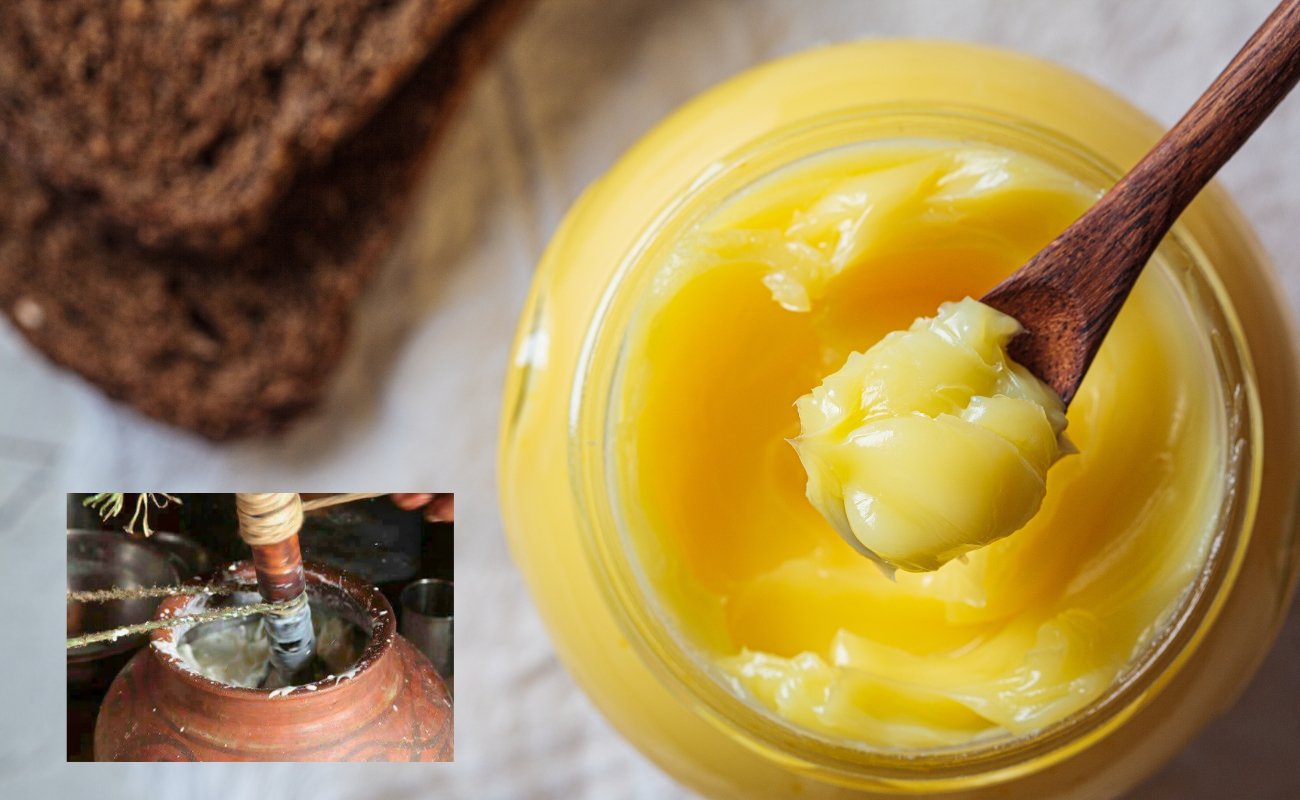
Bilona Desi Ghee is a traditionally prepared Indian ghee made using the bilona method, an ancient Ayurvedic process.
It uses A2 milk from indigenous (desi) cow breeds like Gir, Sahiwal, or Tharparkar, and emphasizes purity, slow cooking, and natural fermentation.
This method is labor-intensive, produces a smaller yield, and is therefore more expensive — but is valued for its nutritional richness and authenticity.
How Bilona Ghee Is Traditionally Made (Bilona Method)

1. Milk Collection
Fresh milk from indigenous cows (often A2 milk) is collected.
2. Curd Formation
The milk is boiled and then set into curd using a natural starter culture.
3. Hand Churning (Bilona)
The curd is churned using a wooden churner (bilona) in clockwise–anticlockwise motion.
This separates:
Makhan (butter)
Buttermilk (chaas)
4. Heating the Makhan
The collected makhan is slowly heated on a low flame, allowing:
The water to evaporate
Milk solids to caramelize
Pure golden ghee to separate naturally
5. Filtration
The ghee is strained and stored in clean glass or earthen containers.
Result: A pure, aromatic, nutrient-dense ghee with rich Ayurvedic qualities.
How Factory-Made (Commercial) Ghee Is Produced
Commercial ghee is typically made through industrial processes:
1. Direct Cream Separation
Milk is separated by machines and cream is collected.
2. Heat Processing
The cream is boiled at high temperatures to obtain ghee.
3. Additives & Automation
Some brands may:
Use preservatives or flavoring essences
Mix vegetable oils or low-quality fats
Use milk from mixed or non-native breeds
Heat at very high temperatures, causing nutrient loss
Result: Larger quantity, lower cost, but not always the same purity, aroma, or nutrient profile.
Bilona Ghee vs Regular (Factory) Ghee — Key Differences
| Feature | Bilona Desi Ghee | Regular Factory-Made Ghee |
|---|---|---|
| Milk Source | A2 desi cow milk | Mixed breeds (A1+A2) |
| Process | Fermented curd → hand-churning → slow heating | Cream separation → high-heat processing |
| Temperature | Low flame, preserves nutrients | High heat destroys some nutrients |
| Additives | None | Often unclear; some use preservatives |
| Purity | Very high | Varies by manufacturer |
| Yield | Very low | High |
| Cost | Expensive | Cheaper |
| Aroma/Flavor | Rich, earthy, Ayurvedic | Strong but less complex |
Why Bilona Desi Ghee Is Considered Better
1. Higher Nutrient Retention
Slow heating and fermentation preserve:
Vitamins A, D, E, K
Omega-3 fatty acids
CLA (Conjugated Linoleic Acid): linked to fat metabolism and immunity
2. Contains Beneficial Butyric Acid
Helps with:
Gut health
Digestion
Reducing inflammation
3. A2 Milk Benefits
Many people find A2 proteins:
Easier to digest
Less inflammatory
4. Free from Additives & Preservatives
The bilona method ensures complete purity.
5. Ayurveda-Backed Preparation
It is considered sattvic, meaning it:
Balances digestion
Improves immunity
Supports energy and brain function
6. Natural Lactose & Casein Reduction
The fermentation–churning–heating sequence reduces lactose and casein, making it easier for sensitive individuals.
Health Benefits of Bilona Desi Ghee
✔ Supports Digestion
Stimulates digestive fire (Agni) and soothes the gut.
✔ Boosts Immunity
Rich in antioxidants and anti-inflammatory components.
✔ Good for Skin & Hair
Healthy fats nourish tissues and promote glow.
✔ Enhances Brain Function
Good source of DHA and fat-soluble vitamins.
✔ Promotes Weight Management
CLA improves metabolism and helps reduce unhealthy fat.
Conclusion
Bilona Desi Ghee stands out due to its traditional Ayurvedic process, purity, and nutrient retention. While regular factory-made ghee is cheaper and more accessible, it often lacks the natural richness and health benefits associated with authentically prepared bilona ghee.
If your goal is purity, nutrition, and long-term health benefits, bilona desi ghee is the superior choice.